Thursday, May 20, 2010
The Mike Bonacorsi Show- May 18, 2010 with guest Nancy Padberg
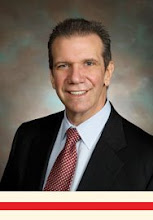
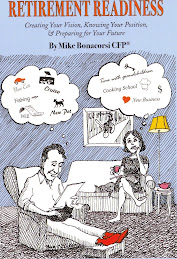
Mike Bonacorsi is a CERTIFIED FINANCIAL PLANNER™ professional, author of the book Retirement Readiness; Creating Your Vision, Knowing Your Position, and Preparing for Your Future, and host of the Mike Bonacorsi Show on WSMN Radio.
The Focus of his practice is helping clients create plans and strategies for retirement built around the key areas of Lifestyle, Wealth and Health. Mike believes that retirement planning is more than just the value of your 401k.
Today Nancy Padberg from BestBoomerTowns.com is on the Show. Ms. Padberg is a former Fortune 500 Times Mirror executive, Integrated Marketing Communications Vice President and MBA graduate from the Graziadio School of Business & Management at Pepperdine University. Ms. Padberg has over 17 years of publishing and marketing expertise, served on several boards, is a guest speaker, published author, former Big 12 golfer and resides in Santa Monica.

Monday, May 17, 2010
Nudge
Nudge-to push against gently, especially to gain attention or give a signal.
At some point we all need a nudge to motivate us to get things moving, whether it is starting a new project or reenergizing your efforts in an existing activity. This nudge can be as subtle as a whisper in your ear or as blatant as a kick in the pants but when it comes you need to be ready to take advantage of the momentum it creates and turn it into action.
This weekend, accepting a friend’s invitation, I attended National Speakers Association meeting as a guest; “you’ll love it, the people are great and the speakers are top-notch” she said.
I am always cautious about joining a group, I’m not one to mingle, however she was right, the people were friendly and I felt comfortable from the moment I walked in.
My nudge came when the speaker began, Chad Barr (CB Software, Chad Barr Group) a web designer and internet strategist, began to speak about web presence, websites, blogs, articles, videos you name and this was my “kick-in-the pants” moment.
I have been thinking about making changes to my website for the past month or two, I had been thinking about updating my blog regularly for the past three months, I had been thinking about doing some e-books. I had been thinking about doing all these things but not doing them something else always got in the way.
This was more than a timely event or a coincidence, maybe a sign from above, who knows but it is Monday morning and I am posting my first blog in three months and have built scheduled postings into my calendar. I will be discussing my website with my web person later this week and plan on having the e-book complete by June 30.
Reasons to put off, ignore or delay are plentiful and easy to accept, fighting the urge to follow them is difficult. Nudges are difficult to find but powerful and loaded with potential energy when acted on. They may come from a book, a speech, maybe a dream, but you need to recognize it and use the momentum it provides.
At some point we all need a nudge to motivate us to get things moving, whether it is starting a new project or reenergizing your efforts in an existing activity. This nudge can be as subtle as a whisper in your ear or as blatant as a kick in the pants but when it comes you need to be ready to take advantage of the momentum it creates and turn it into action.
This weekend, accepting a friend’s invitation, I attended National Speakers Association meeting as a guest; “you’ll love it, the people are great and the speakers are top-notch” she said.
I am always cautious about joining a group, I’m not one to mingle, however she was right, the people were friendly and I felt comfortable from the moment I walked in.
My nudge came when the speaker began, Chad Barr (CB Software, Chad Barr Group) a web designer and internet strategist, began to speak about web presence, websites, blogs, articles, videos you name and this was my “kick-in-the pants” moment.
I have been thinking about making changes to my website for the past month or two, I had been thinking about updating my blog regularly for the past three months, I had been thinking about doing some e-books. I had been thinking about doing all these things but not doing them something else always got in the way.
This was more than a timely event or a coincidence, maybe a sign from above, who knows but it is Monday morning and I am posting my first blog in three months and have built scheduled postings into my calendar. I will be discussing my website with my web person later this week and plan on having the e-book complete by June 30.
Reasons to put off, ignore or delay are plentiful and easy to accept, fighting the urge to follow them is difficult. Nudges are difficult to find but powerful and loaded with potential energy when acted on. They may come from a book, a speech, maybe a dream, but you need to recognize it and use the momentum it provides.
Monday, February 8, 2010
I Went, I Plunged, I Had a Blast
Yesterday was 30 degrees with a 15-20 mph wind, the water temperature at Hampton Beach was a few degrees warmer; a good day for a swim? You wouldn’t think so but that is exactly what I and several hundred others did participating in the Special Olympics of New Hampshire’s annual Penguin Plunge.
Being a rookie I didn’t know what to expect, Karen and I arrived at the Hampton Beach Casino & and Ballroom around 10:30 to see a party in full force. The place was packed with fellow plungers, some in costume, and supporters, and an 80’s cover band was on stage rockin’. I found my teammates the “No Flockin’ Ideas” from the Plus Company in Nashua and the first words out of everyone’s mouth was “are you ready for this”?
At 11:30, the costume parade began and the changing tents opened, these were giant heated tents to hang out in until it was time to plunge. There were four waves of plungers; we were in the first group. Once changed we headed out toward the beach, you don’t realize how cold it is at first because you are still warm from the tents but, it didn’t take long for the chilly reality to set in.
The wait at the starting line seemed to last forever, I’m not sure if it was the cold or the nervous adrenaline that forcing me to jump up and down. All of a sudden, the crowd started to move forward and I Knew there was no turning back. I remember laughing as I dashed to the water; I plowed in to thigh deep then dropped under. As I came up the cold caused me to take one deep inhale, I think it was the only breath I took until I reached the warmth of the tent.
After changing, we headed back for lunch, laughs and our stories of the experience. Karen and I are new to Special Olympics, my first involvement last summer with softball and now basketball and Karen working with the snowshoe team sponsored by the Plus Company. The plunge event like all events involving Special Olympics had me smiling from the time I arrived to the time I left. When I was I asked how I felt my answer wasn’t “cold” it was “I had a blast, and I will do it again next year”.
Being a rookie I didn’t know what to expect, Karen and I arrived at the Hampton Beach Casino & and Ballroom around 10:30 to see a party in full force. The place was packed with fellow plungers, some in costume, and supporters, and an 80’s cover band was on stage rockin’. I found my teammates the “No Flockin’ Ideas” from the Plus Company in Nashua and the first words out of everyone’s mouth was “are you ready for this”?
At 11:30, the costume parade began and the changing tents opened, these were giant heated tents to hang out in until it was time to plunge. There were four waves of plungers; we were in the first group. Once changed we headed out toward the beach, you don’t realize how cold it is at first because you are still warm from the tents but, it didn’t take long for the chilly reality to set in.
The wait at the starting line seemed to last forever, I’m not sure if it was the cold or the nervous adrenaline that forcing me to jump up and down. All of a sudden, the crowd started to move forward and I Knew there was no turning back. I remember laughing as I dashed to the water; I plowed in to thigh deep then dropped under. As I came up the cold caused me to take one deep inhale, I think it was the only breath I took until I reached the warmth of the tent.
After changing, we headed back for lunch, laughs and our stories of the experience. Karen and I are new to Special Olympics, my first involvement last summer with softball and now basketball and Karen working with the snowshoe team sponsored by the Plus Company. The plunge event like all events involving Special Olympics had me smiling from the time I arrived to the time I left. When I was I asked how I felt my answer wasn’t “cold” it was “I had a blast, and I will do it again next year”.
Monday, January 25, 2010
10 Retirement Planning Ideas for 2010
After a rocky year, we have finally turned the corner to 2010, like many of you I am ready to put 2009 in the history books and move forward. I am always excited to move onto the next year, I consider it the time to recharge, review and restart after the craziness of the holidays.
Over the past year, I have written a number of articles relating to issues to help you plan and prepare for your future. I thought this would be a good time to list ten actions for you to take as you review your current plan and prepare for the upcoming year.
1) Review your expenses, not just your monthly bills but include your out of pocket spending. Get a notebook and track where your money goes, after a month of tracking review your spending habits. Look for “habit expenses” you can reduce or eliminate.
2) Increasing your savings should follow cutting back on expenses. Increase your 401k contribution add to your IRA, or your savings account on a regular schedule. It does not have to be a lot but once you start do not stop, over time it will add up.
3) Lower your debt where possible work on paying off loans, and credit cards. Add to your scheduled payment when possible, every dollar of debt payment you reduce puts a dollar in your pocket.
4) Review your Social Security and pension benefits. Social Security provides statements to you each year showing possible benefits available. Start thinking about when you will take your benefits. Make sure you weigh the pros and cons of each option and consider the affect your decision will have while you are alive and the needs of your surviving spouse.
5) Review your estate plan and make sure your plans align with your wishes; review your will, trust and beneficiary designations to make sure they are current.
6) Review your insurance policies and make sure you have sufficient coverage; auto, home, life and liability.
7) Spend more time with family and friends reconnect with someone with whom you have lost touch.
8) Review your health with your doctor just as you would your financial plan with your advisor. Discuss areas to work on to improve your health, set reasonable goals, and commit to them.
9) Exercise your mind. Your brain needs exercise just like a muscle to perform at peak capacity, make this a year to learn something new and give your brain a workout. Take a class, learn a language, write a book, or join a book club.
10) Take some time for yourself. It is ok to be selfish and enjoy some “me” time. A massage, a spa day, a round of golf, whatever the activity take time out of your busy life to do the things you enjoy.
Make your goals reasonable do not decide to reduce your monthly expenses by eating two rather than three meals a day. A more practical goal would be to fill your travel mug with coffee before leaving for work and eliminating a stop at the high-end coffee shop, you can probably save ten dollars a week or more.
Make sure you get a notebook and commit to your goals and the strategy to reach them in writing, the commitment to accomplish is much stronger if it is in writing and monitor your progress. Set dates to accomplish each goal for example meet with attorney to update trust during the month of February, add fifty dollars a month to my IRA, the more specific the goal and strategy the stronger the commitment.
Each January 1 people make resolutions and by January 15 they have been forgotten. Make this year the year you carry your resolutions from January 1 to December 31, look at your accomplishments and you will stronger more confident and more “in control”.
Over the past year, I have written a number of articles relating to issues to help you plan and prepare for your future. I thought this would be a good time to list ten actions for you to take as you review your current plan and prepare for the upcoming year.
1) Review your expenses, not just your monthly bills but include your out of pocket spending. Get a notebook and track where your money goes, after a month of tracking review your spending habits. Look for “habit expenses” you can reduce or eliminate.
2) Increasing your savings should follow cutting back on expenses. Increase your 401k contribution add to your IRA, or your savings account on a regular schedule. It does not have to be a lot but once you start do not stop, over time it will add up.
3) Lower your debt where possible work on paying off loans, and credit cards. Add to your scheduled payment when possible, every dollar of debt payment you reduce puts a dollar in your pocket.
4) Review your Social Security and pension benefits. Social Security provides statements to you each year showing possible benefits available. Start thinking about when you will take your benefits. Make sure you weigh the pros and cons of each option and consider the affect your decision will have while you are alive and the needs of your surviving spouse.
5) Review your estate plan and make sure your plans align with your wishes; review your will, trust and beneficiary designations to make sure they are current.
6) Review your insurance policies and make sure you have sufficient coverage; auto, home, life and liability.
7) Spend more time with family and friends reconnect with someone with whom you have lost touch.
8) Review your health with your doctor just as you would your financial plan with your advisor. Discuss areas to work on to improve your health, set reasonable goals, and commit to them.
9) Exercise your mind. Your brain needs exercise just like a muscle to perform at peak capacity, make this a year to learn something new and give your brain a workout. Take a class, learn a language, write a book, or join a book club.
10) Take some time for yourself. It is ok to be selfish and enjoy some “me” time. A massage, a spa day, a round of golf, whatever the activity take time out of your busy life to do the things you enjoy.
Make your goals reasonable do not decide to reduce your monthly expenses by eating two rather than three meals a day. A more practical goal would be to fill your travel mug with coffee before leaving for work and eliminating a stop at the high-end coffee shop, you can probably save ten dollars a week or more.
Make sure you get a notebook and commit to your goals and the strategy to reach them in writing, the commitment to accomplish is much stronger if it is in writing and monitor your progress. Set dates to accomplish each goal for example meet with attorney to update trust during the month of February, add fifty dollars a month to my IRA, the more specific the goal and strategy the stronger the commitment.
Each January 1 people make resolutions and by January 15 they have been forgotten. Make this year the year you carry your resolutions from January 1 to December 31, look at your accomplishments and you will stronger more confident and more “in control”.
Wednesday, December 23, 2009
Caregiving Considerations for Elderly Parents
Are you a baby boomer caring for parents who are having difficulty dealing with day-to day activities? Many boomers find themselves preparing for their retirement while caring for parents who, due to physical restrictions or mental impairment, are no longer able to maintain the independent life.
As our parents age it will be necessary to discuss with them the possibility that due to illness or injury they may no longer be able to live as independently as they had in the past. In the past, care was usually provided by a family member or if the care required skilled caregivers, a nursing home. Now, families are busier and more spread out geographically than in the past and the parent requiring the skill may not feel comfortable depending on their children for help.
Depending on the level of care needed many options for care are available, some of the more familiar options are:
1) Home Care, can be provided by a skilled care provider. This type of care can provide meals, transportation, assist with bathing and other daily functions. Trained professionals, nurses and therapists, can also provide home services as needed.
2) Adult Day Care can benefit those who are able to get around by providing daily social and health services in a supervised environment.
3) Assisted living facilities provide personal care, housekeeping and assistance with daily functions. Continuing Care Retirement Communities are communities that provide different levels of care from independent living to full-time care.
4) Nursing homes provide skilled nursing care, therapy, and personal care and assistance.
Make sure your parents are involved in the “due diligence” process, give them the opportunity to voice their concerns and pay attention to what they are saying. Remember, they are facing the realization that after spending a lifetime of caring for themselves and others they are the ones that need care.
As our parents age it will be necessary to discuss with them the possibility that due to illness or injury they may no longer be able to live as independently as they had in the past. In the past, care was usually provided by a family member or if the care required skilled caregivers, a nursing home. Now, families are busier and more spread out geographically than in the past and the parent requiring the skill may not feel comfortable depending on their children for help.
Depending on the level of care needed many options for care are available, some of the more familiar options are:
1) Home Care, can be provided by a skilled care provider. This type of care can provide meals, transportation, assist with bathing and other daily functions. Trained professionals, nurses and therapists, can also provide home services as needed.
2) Adult Day Care can benefit those who are able to get around by providing daily social and health services in a supervised environment.
3) Assisted living facilities provide personal care, housekeeping and assistance with daily functions. Continuing Care Retirement Communities are communities that provide different levels of care from independent living to full-time care.
4) Nursing homes provide skilled nursing care, therapy, and personal care and assistance.
Make sure your parents are involved in the “due diligence” process, give them the opportunity to voice their concerns and pay attention to what they are saying. Remember, they are facing the realization that after spending a lifetime of caring for themselves and others they are the ones that need care.
Monday, December 7, 2009
Year-End Tax Thoughts
With a little less than a month left in 2009, you still have time to implement some year-end tax planning strategies for the year and review some options for next year.
Reviewing your investments is a good place to start if you have investments that have lost money now may be the time to sell. By selling at a loss, less than your purchase price, you can offset taxes on current or future capital gains. If you do not have gains or unused losses you are allowed to carryover the losses to future years, until exhausted.
If you qualify for a deductible IRA contribution you have until April 15, 2010 to make a 2009 contribution. Your ability to take a deduction will depend on income and qualified plan participation but it should be considered.
Contributing to a qualified charity either cash or property may qualify for a tax deduction. It is important to note detailed record keeping of the contribution including amount, date, and acknowledgement by the charity is necessary; gifts above $250 require stricter documentation.
First time homebuyers received an extension on the tax credit, up to $8000 that was set to end last month. Certain conditions must be met before you can qualify for the credit:
1) You must be a first time homebuyer. A first time homebuyer has not owned a home within the last three years and the purchase must be the buyer’s primary residence.
2) Income limits apply. The full credit is available to buyers with modified adjusted gross income (MAGI) of up to $125,000 or $245,000 joint. The credit is reduced up to $145,000 and $245,000 and not available at higher incomes.
3) In order to qualify there has to be a contract to buy in place by May 1 and the sale must be closed by July 1. If the purchase completes in 2009, it can be applied to the buyers 2008 or 2009 income tax, if completed it 2010 it can be applied to either the 2009 or 2010 tax return.
4) Existing homebuyers can also take advantage of the credit. If they have lived in their existing, home for at least five out of the past eight years and use the purchase as a primary residence. The credit for existing homebuyers is lower, up to $6500.
Energy improvements to your home can provide up to $1500 in tax credits and up to $3400 may be available for the purchase of certain hybrid vehicles.
Year-end tax strategies require thought and planning, the decision to take the credit or deduction in the current year or waiting until the following year will depend on your situation. It is important you sit with your financial advisor and tax advisor to determine the correct strategy for you.
Reviewing your investments is a good place to start if you have investments that have lost money now may be the time to sell. By selling at a loss, less than your purchase price, you can offset taxes on current or future capital gains. If you do not have gains or unused losses you are allowed to carryover the losses to future years, until exhausted.
If you qualify for a deductible IRA contribution you have until April 15, 2010 to make a 2009 contribution. Your ability to take a deduction will depend on income and qualified plan participation but it should be considered.
Contributing to a qualified charity either cash or property may qualify for a tax deduction. It is important to note detailed record keeping of the contribution including amount, date, and acknowledgement by the charity is necessary; gifts above $250 require stricter documentation.
First time homebuyers received an extension on the tax credit, up to $8000 that was set to end last month. Certain conditions must be met before you can qualify for the credit:
1) You must be a first time homebuyer. A first time homebuyer has not owned a home within the last three years and the purchase must be the buyer’s primary residence.
2) Income limits apply. The full credit is available to buyers with modified adjusted gross income (MAGI) of up to $125,000 or $245,000 joint. The credit is reduced up to $145,000 and $245,000 and not available at higher incomes.
3) In order to qualify there has to be a contract to buy in place by May 1 and the sale must be closed by July 1. If the purchase completes in 2009, it can be applied to the buyers 2008 or 2009 income tax, if completed it 2010 it can be applied to either the 2009 or 2010 tax return.
4) Existing homebuyers can also take advantage of the credit. If they have lived in their existing, home for at least five out of the past eight years and use the purchase as a primary residence. The credit for existing homebuyers is lower, up to $6500.
Energy improvements to your home can provide up to $1500 in tax credits and up to $3400 may be available for the purchase of certain hybrid vehicles.
Year-end tax strategies require thought and planning, the decision to take the credit or deduction in the current year or waiting until the following year will depend on your situation. It is important you sit with your financial advisor and tax advisor to determine the correct strategy for you.
Monday, November 9, 2009
Education - It is for Everyone
A couple of weeks ago Ellen Griffin, Dean of Continuing Education at Southern New Hampshire University, was a guest on my radio show. The discussion was the increase in baby boomers returning to the classroom, the reasons and the opportunities.
Many are returning to school to increase career opportunities in their current profession, graduate program enrollees have increased as well as certificate programs, others are returning to school in preparation for a career change. People are expecting to stay in the workforce longer, whether it is at their current job or a new career, and keeping current with your industry and increasing your value is necessary to remain competitive.
The ease of learning may also contribute to the rise in boomer enrollment, satellite campuses, workplace classrooms and online courses make it easier to participate and complete study programs. It is possible to complete a degree program online without leaving your house or setting foot in a classroom.
Boomers who attend a live classroom bring something to the table their younger classmate’s lack, real life experience with the subject matter. This can be a plus to someone, who is learning the theoretical workings of an issue, to have the opportunity to hear firsthand the actual application of the theory.
One area in particular that has attracted the attention of baby boomers is community service, this generation has a “give back” attitude and there is interest in bringing their management and leadership skills to the non-profit area.
A Boston Globe article on September 13, 2009 referred to the fact that people are expecting to stay in the workforce longer and fifty year olds consider themselves mid-career. The number of Americans over 65 is expected to grow to 20% of the population by 2030 and to continue to increase meanwhile the younger generations will grow at a slower pace. This will open up opportunities for older workers to continue to stay in the workforce, keeping current through education and training will strengthen their position value.
Many are returning to school to increase career opportunities in their current profession, graduate program enrollees have increased as well as certificate programs, others are returning to school in preparation for a career change. People are expecting to stay in the workforce longer, whether it is at their current job or a new career, and keeping current with your industry and increasing your value is necessary to remain competitive.
The ease of learning may also contribute to the rise in boomer enrollment, satellite campuses, workplace classrooms and online courses make it easier to participate and complete study programs. It is possible to complete a degree program online without leaving your house or setting foot in a classroom.
Boomers who attend a live classroom bring something to the table their younger classmate’s lack, real life experience with the subject matter. This can be a plus to someone, who is learning the theoretical workings of an issue, to have the opportunity to hear firsthand the actual application of the theory.
One area in particular that has attracted the attention of baby boomers is community service, this generation has a “give back” attitude and there is interest in bringing their management and leadership skills to the non-profit area.
A Boston Globe article on September 13, 2009 referred to the fact that people are expecting to stay in the workforce longer and fifty year olds consider themselves mid-career. The number of Americans over 65 is expected to grow to 20% of the population by 2030 and to continue to increase meanwhile the younger generations will grow at a slower pace. This will open up opportunities for older workers to continue to stay in the workforce, keeping current through education and training will strengthen their position value.
Tuesday, October 13, 2009
Make Sure Your Assets are Covered
Two weeks ago I invited Chuck Worcester, owner of Hometown Insurance, to be a guest on my radio show to talk about the importance of property, casualty and liability insurance. Having Chuck on was a good reminder to incorporate a risk management strategy as part of your total financial plan and, like the other strategies, needs monitoring and updating.
Often home and auto insurance coverage once established are put on autopilot and ignored until filing a claim becomes necessary. It is important to meet with your insurance agent and review the risk management strategy of your financial plan annually. Maintaining the proper coverage for you assets is critical to protect against damage, injury, or claims against you.
As part of the annual review of your coverage, you should:
1) Make sure your coverage is adequate for your assets and make sure all assets that need insurance coverage are covered. Your life changes and so do the assets you own, keep your agent aware of purchases that will require insurance and make sure they are covered.
2) Make sure your agent knows how certain properties will be used (business or property) and who will be using it (employees, family, etc). This is especially important when you are insuring vehicles and equipment or allowing others access to use your property.
3) Make sure you have adequate liability coverage. Insuring against a piece of property being damaged or stolen is not enough you need to have coverage for damage and injury to others. A large claim or lawsuit against you may exceed your policy’s coverage consider a separate liability umbrella policy for greater protection.
4) Make sure you are getting the best coverage for your dollar. Have your agent compare rates and coverage but remember cheapest is not always best.
Losing the use of property due to damage or a lawsuit against you due to negligence, injury or damage to other’s property can be devastating. You can’t control all the risks out there, accidents happen but you need to be prepared, and maintaining an active risk management strategy can offer protection. Don’t ignore this critical strategy from your financial plan.
Often home and auto insurance coverage once established are put on autopilot and ignored until filing a claim becomes necessary. It is important to meet with your insurance agent and review the risk management strategy of your financial plan annually. Maintaining the proper coverage for you assets is critical to protect against damage, injury, or claims against you.
As part of the annual review of your coverage, you should:
1) Make sure your coverage is adequate for your assets and make sure all assets that need insurance coverage are covered. Your life changes and so do the assets you own, keep your agent aware of purchases that will require insurance and make sure they are covered.
2) Make sure your agent knows how certain properties will be used (business or property) and who will be using it (employees, family, etc). This is especially important when you are insuring vehicles and equipment or allowing others access to use your property.
3) Make sure you have adequate liability coverage. Insuring against a piece of property being damaged or stolen is not enough you need to have coverage for damage and injury to others. A large claim or lawsuit against you may exceed your policy’s coverage consider a separate liability umbrella policy for greater protection.
4) Make sure you are getting the best coverage for your dollar. Have your agent compare rates and coverage but remember cheapest is not always best.
Losing the use of property due to damage or a lawsuit against you due to negligence, injury or damage to other’s property can be devastating. You can’t control all the risks out there, accidents happen but you need to be prepared, and maintaining an active risk management strategy can offer protection. Don’t ignore this critical strategy from your financial plan.
Tuesday, September 15, 2009
Health Planning is Retirement Planning
I try to keep a regular weekly exercise schedule, running 3-4 miles three times and lifting weights two or three days. I exercise because at fifty-five years old I understand the benefits of being healthy more energy, lower blood pressure, stronger heart, and hopefully the ability to live a long and active life.
All the talk and concern about health care costs makes me wonder why we aren’t more pro-active about taking control of our own healthy lifestyle. Watching what we eat, regular exercise, and following our doctors instructions can add to our “quality of life” as we get older.
Taking control of your lifestyle health is more than a handful of vitamins and a walk around the block. It takes work, changes, and maybe some sacrifice, but the rewards will be worth it. You will feel better, confident, and in control; imagine losing 20 pounds and shopping for a new outfit because your old ones are too big. How about having the energy to play catch with your children or grandchildren when they visit?
If you have already made the commitment to yourself to be healthy, don’t stop or slow down. If you are ready to make some changes to your lifestyle there are steps you should follow:
1. Before beginning any exercise program or lifestyle changes consult your physician. Discuss your intentions and ask about any restrictions, limitations or concerns the doctor may have, if diet changes are needed ask for a recommendation to a dietician or nutritionist.
2. Work with a trainer, if you are unfamiliar with setting up an exercise program. Let the trainer know what you want to accomplish, (lose weight, lower blood pressure etc), and any concerns from your doctor. Work together to set goals, short and long term.
3. Realize that creating a healthy lifestyle is more than dieting to lose ten pounds before your high school reunion. Just like a financial plan your plans to create a healthier lifestyle must have strategies that are implemented, monitored and tweaked as time goes on.
Exercising and maintaining a healthy lifestyle doesn’t guarantee we will live longer or healthier but it certainly increases the odds. By taking care of our health we can extend the quality of life needed to enjoy the later years of life. I saw a great quote the other day “it is not how long you live, it is how you live long.”
All the talk and concern about health care costs makes me wonder why we aren’t more pro-active about taking control of our own healthy lifestyle. Watching what we eat, regular exercise, and following our doctors instructions can add to our “quality of life” as we get older.
Taking control of your lifestyle health is more than a handful of vitamins and a walk around the block. It takes work, changes, and maybe some sacrifice, but the rewards will be worth it. You will feel better, confident, and in control; imagine losing 20 pounds and shopping for a new outfit because your old ones are too big. How about having the energy to play catch with your children or grandchildren when they visit?
If you have already made the commitment to yourself to be healthy, don’t stop or slow down. If you are ready to make some changes to your lifestyle there are steps you should follow:
1. Before beginning any exercise program or lifestyle changes consult your physician. Discuss your intentions and ask about any restrictions, limitations or concerns the doctor may have, if diet changes are needed ask for a recommendation to a dietician or nutritionist.
2. Work with a trainer, if you are unfamiliar with setting up an exercise program. Let the trainer know what you want to accomplish, (lose weight, lower blood pressure etc), and any concerns from your doctor. Work together to set goals, short and long term.
3. Realize that creating a healthy lifestyle is more than dieting to lose ten pounds before your high school reunion. Just like a financial plan your plans to create a healthier lifestyle must have strategies that are implemented, monitored and tweaked as time goes on.
Exercising and maintaining a healthy lifestyle doesn’t guarantee we will live longer or healthier but it certainly increases the odds. By taking care of our health we can extend the quality of life needed to enjoy the later years of life. I saw a great quote the other day “it is not how long you live, it is how you live long.”
Subscribe to:
Posts (Atom)